Request demo
4.9/5 rating
Account reconciliations
Agentic journal entries
Agentic transaction matching
Working papers
Agentic flux analysis

What our customers are saying




Key product differentiators
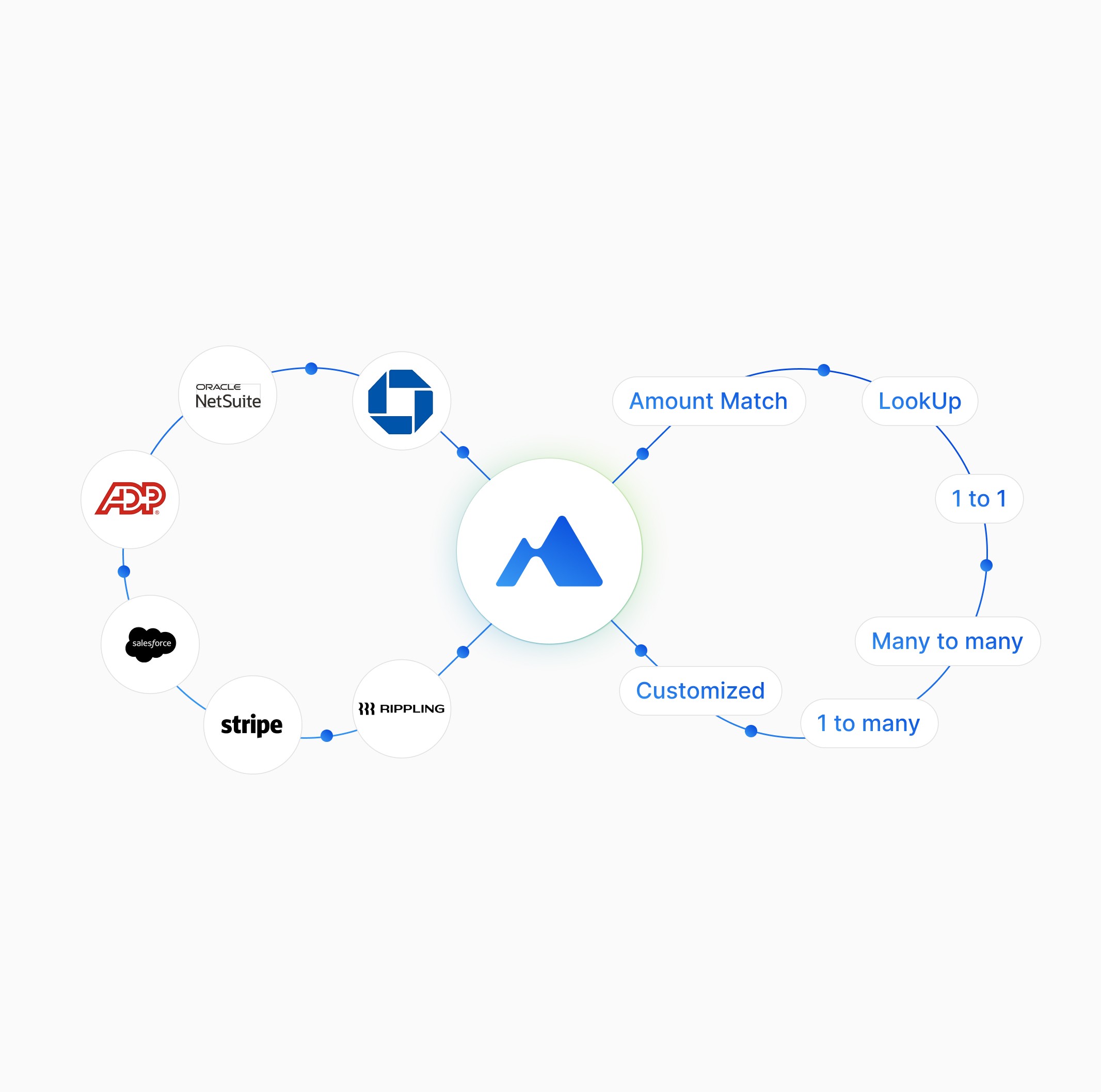
Maxima merges and transforms messy source data upstream so matching stays accurate at millions of transactions.
Unlike FloQast’s standalone matching, Maxima carries matches straight into reconciliations and journal preparation, reducing manual tie-outs across the close.
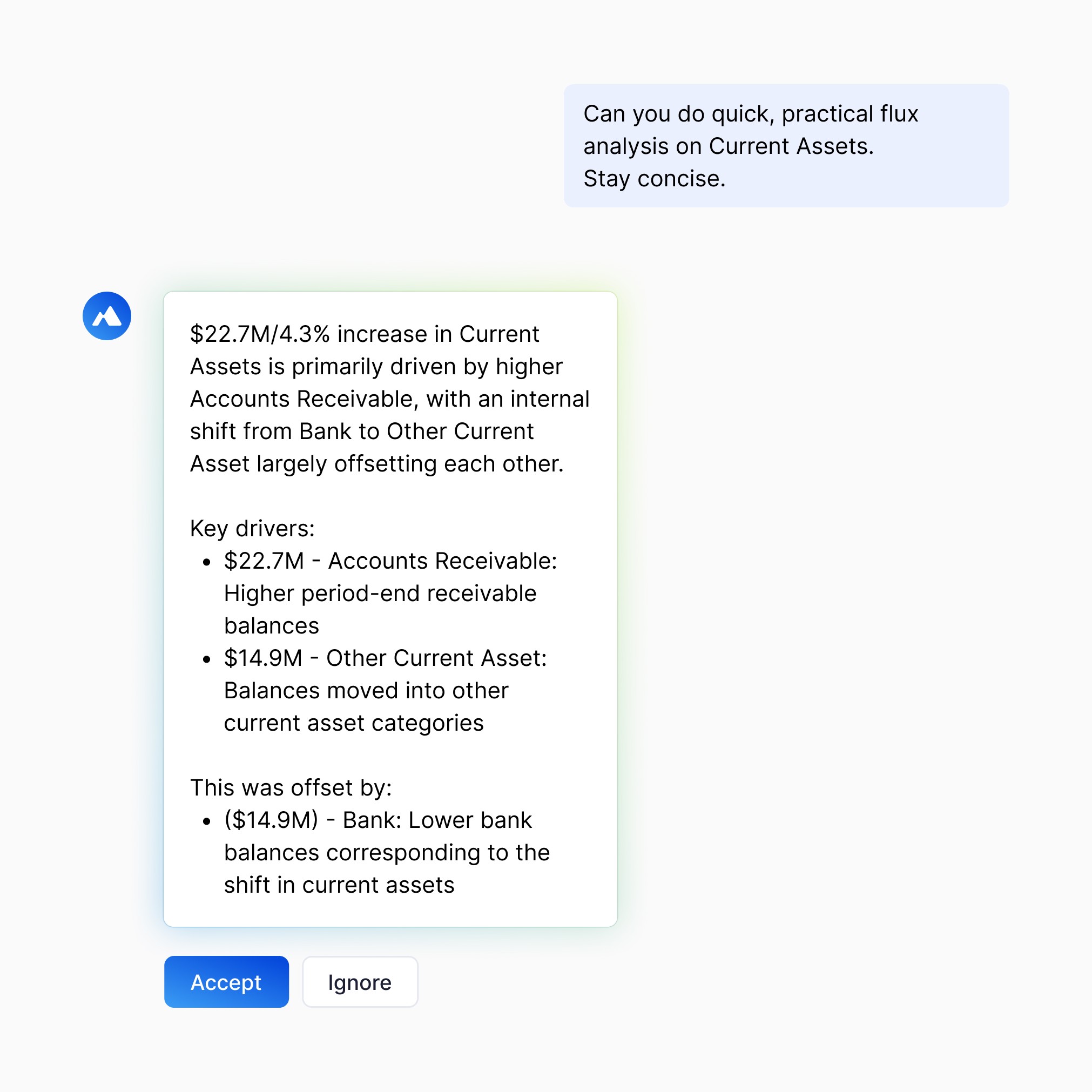
Maxima’s Flux Agent doesn’t just flag period-over-period changes. It queries your GL and underlying transactions to draft variance explanations with supporting detail, ready for review
Unlike FloQast, Maxima’s flux rolls up by your actual GL dimensions and drills through multiple levels to the exact transactions driving each variance.
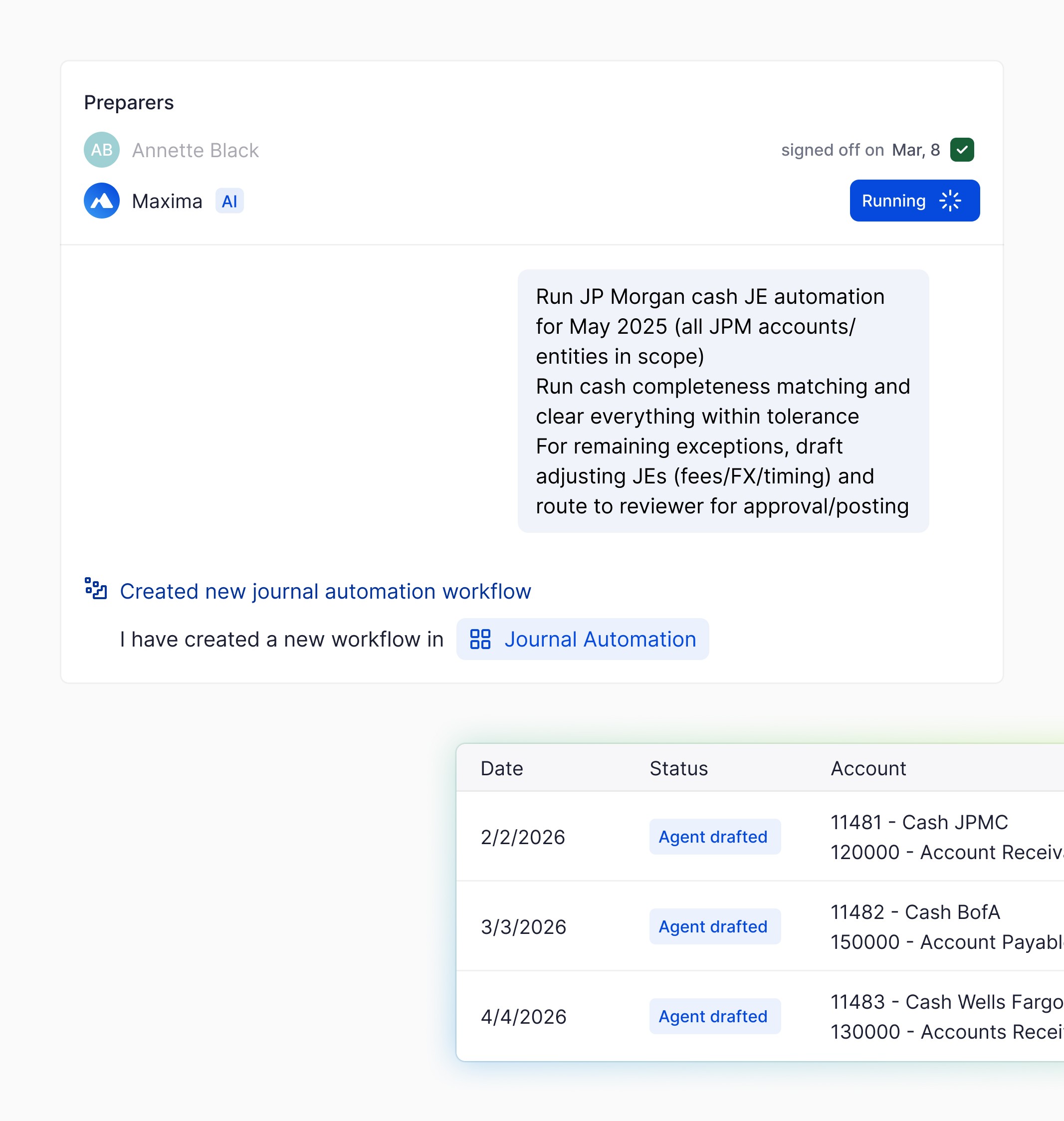
Maxima connects to 100+ upstream systems, transforms source transactions into policy aligned journal entries, and routes them for review in a single workflow.
Unlike FloQast, Maxima automates the full path from raw transaction to posting in the GL under approval, reducing manual preparation and spreadsheet uploads across the close.
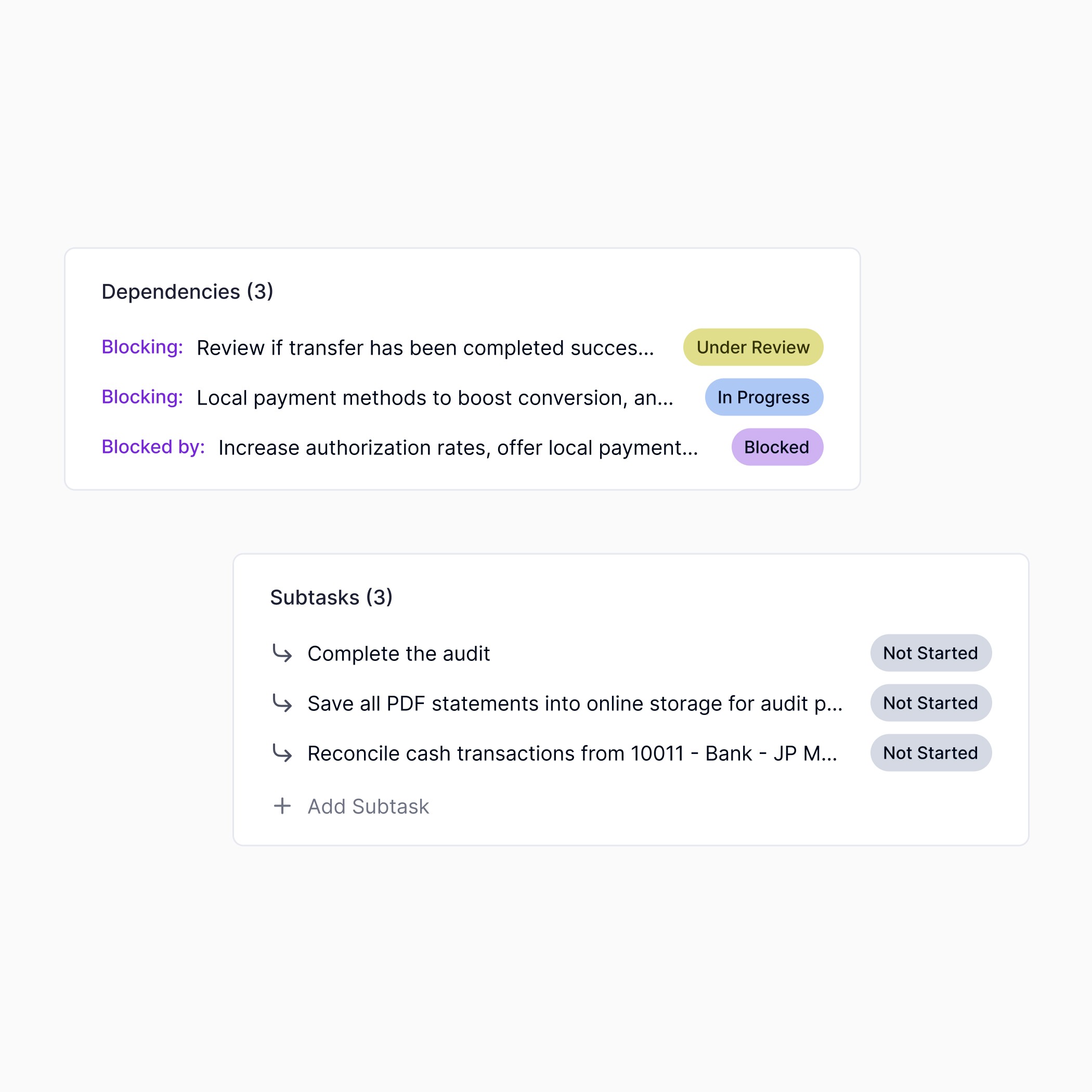
Maxima’s Close Command Center centralizes tasks, journals, reconciliations, and flux with built-in subtasks, giving teams full visibility without extra coordination.
Unlike static checklists, Maxima supports dependencies and conditional logic, so teams don’t chase updates manually and complex closes stay synchronized across contributors.
Scale AI, SpotOn, Rippling and many others migrated off from FloQast

98% automated
98% of manual cash workflows eliminated across 10+ upstream data sources

1 source of truth
Unified bank feeds and systems, then posted directly into NetSuite with zero data silos

700 hrs/mo saved
while processing 4M+ transactions

Making the switch from FloQast to Maxima is easy
1
Connect directly to your source systems and GL
Maxima connects to your GL and the systems that feed the close, including banks, cards, HRIS, billing, spend tools, and files.
It pulls the underlying transactions with source-to-GL lineage so every tie-out is traceable without exports, CSV shuttles, or manual workarounds.
2
Configure your policies & controls without IT
In Maxima, materiality thresholds, reviewer and approver routing, and exception handling are simple configuration, not an implementation project.
Once set, every agent-prepared output follows your control framework consistently across journals, reconciliations, matching, and flux.
3
Start where your close is breaking
Go live by automating your highest-friction area first, whether that’s balance sheet reconciliations, detailed flux explanations, or high-volume transaction matching.
Then expand module by module without disrupting your GL, reporting stack, or approval hierarchy.
Don’t coordinate your close, automate it
AI agents do the work
Unlike FloQast, the close isn't just tracked or reported, it's done for you.
Books are always updated
Daily cash application, recurring JEs, and reconciliation keep you up-to-date all month long.
Audit-ready by design
Every JE, reconciliation, and working paper is tied directly to source data.

See the difference yourself
Frequently asked questions
How is Maxima different from FloQast?
FloQast is a close management and checklist tool. It helps teams track tasks, document completion, and manage workflow during the month-end close. The preparation of journals, reconciliations, transaction matching, and flux analysis is still manual. Maxima is an AI-native accounting automation platform. Instead of tracking manual work, Maxima automates close preparation end to end, with AI agents pulling source transactions, preparing reconciliations, generating journal entries with audit-ready documentation, auto-matching transactions, and drafting variance explanations. Accounting teams review and approve instead of preparing from scratch.
Why do teams see higher ROI with Maxima than FloQast?
Close management tools like FloQast improve visibility and coordination, but close preparation still lives in spreadsheets, email threads, and manual exports. Maxima delivers higher ROI and faster time to value by automating close preparation end to end, completing multi-step workflows like journal preparation, reconciliations, transaction matching, and flux analysis, then routing review-ready outputs for approval. ROI comes from automation, not just better tracking, and most teams see value quickly because the work lands prepared, not just tracked.
Does Maxima include close management and checklist features?
Yes. Maxima includes checklist management, task dependencies, collaboration tools, and workflow tracking through its Close Command Center. The difference is that many checklist items are completed automatically by AI agents before reaching a human reviewer, combining close management software with accounting automation.
How does Maxima pricing compare to FloQast?
Maxima uses SaaS subscription pricing with a base platform fee plus module-based pricing, tailored to your transaction volume, number of entities, and system complexity. Compared to close management tools like FloQast, Maxima typically delivers higher ROI because it automates close preparation work, not just checklist and workflow tracking. Many customers see 50-80% time savings in automated workflows and reduce close cycles by 2-10 days.
What kind of support do you offer?
Maxima provides white-glove onboarding with dedicated implementation, comprehensive documentation, ongoing training, and responsive customer success management to every customer. Our deployment team includes former accountants and controllers from PwC and EY, as well as Fintech and AI engineers from companies like Meta, Netflix, and Robinhood to ensure customers get value out of Maxima long-term.
Move closer to an audit-ready, continuous close
Request demo
Insights, news and content
The latest
See all