You’re looking for a FloQast alternative because the close is getting harder to run at scale. Maybe entity count crept past what checklists can handle, maybe prep work is still eating the first week of every month, or maybe audit evidence is living in too many places.
This list covers the ten platforms controllers actually shortlist, grouped by operating model so you can match a tool to your real bottleneck.
What FloQast is (and what it’s built to do)
FloQast is a close management platform used by 2,800+ accounting teams. It gives mid-market teams a structured way to run checklists, sign-offs, and visibility across the close by treating it as a coordination problem: who owns what, what’s done, what’s blocked.
Where it shines is coordination. Where it stops is preparation. FloQast organizes the month-end process, but journals, recs, and matching still happen wherever they happened before.
FloQast’s core job: coordinate the process (not prepare the work)
What’s organized well | What still stays manual |
Close checklists and task ownership | Journal entry preparation |
Sign-offs and review status | Reconciliation substantiation |
Visibility across the team | Transaction matching |
Audit trail of completion | Flux explanations and variance research |
FloQast’s limitations
These aren’t flaws; they’re the natural edges of an orchestration-first tool. Past roughly 50 entities, checklist-driven close stops scaling and starts adding overhead.
Preparation automation: Tasks are tracked but not prepared, so the month-end spike persists.
Deep ERP integration: Connectors are functional but shallow, limiting transaction-level lineage.
Multi-entity scale: Checklists fragment past 50 entities and add coordination overhead.
Multi-currency complexity: FX remeasurement and intercompany workflows live outside the tool.
Reconciliation substantiation: Sign-offs are tracked, but the rec itself is prepared elsewhere.
How we evaluated these FloQast alternatives
Every platform on this list was assessed against the same six criteria, applied from the perspective of a controller running a complex, high-volume close. The goal was to separate tools that remove prep work from tools that repackage it.
Operating model: Does the platform prepare accounting work (journals, recs, matching) or orchestrate human-prepared tasks? This is the primary filter because it determines whether you remove prep hours or just repackage them.
Automation depth: What percentage of close work is genuinely automated end-to-end, and where does a human still need to build, maintain, or export before the system can act?
ERP and data integration: How does data get in, how frequently, and who owns the mapping and normalization? Shallow integrations create their own month-end bottleneck.
Controls and audit readiness: Are SOX-aligned controls (segregation of duties, approval workflows, immutable logs, transaction-level lineage) enforced architecturally or documented as a policy layer?
Multi-entity and multi-currency scalability: Does the platform hold up when entity count grows past 20-50 or when FX remeasurement and intercompany eliminations enter the picture?
Implementation and ongoing admin burden: What does it realistically take to go live and maintain the system as your chart of accounts, entities, and workflows evolve?
What to look for in a FloQast alternative
Two things separate a real FloQast alternatives from a lateral move: operating model and execution depth. Here’s what to evaluate before you shortlist anything.
Operating model: Determines if prep hours go away or just get repackaged. Look for agent-prepared journals and recs with human review, not a better checklist UI.
Lineage: Audit defense without screenshot exports. You need transaction-level traceability back to source systems.
Controls: SOX defensibility requires enforced segregation of duties and immutable logs, not just a sign-off field.
Integrations: Data freshness drives close speed. Native, continuous connectors with no middleware is the bar.
Exception handling: Where automation actually pays off. Routed exceptions with clear approval gates separate real automation from repackaged manual work.
Orchestration tools manage human-prepared work. Preparation tools generate the work. The practical question is who does the preparation and when.
Quick comparison: 8 FloQast alternatives at a glance
Tool | Best for | Primary strength | Primary tradeoff |
Maxima | Removing manual prep work | Agent-prepared journals, recs, matching, flux | Newer category, custom pricing |
BlackLine | Mature enterprises | Reconciliation depth and controls | Admin overhead and cost |
Trintech | Enterprise standardization | Multi-entity governance | Heavy implementation |
Workiva | SEC reporting and SOX evidence | Controlled reporting workflows | Doesn’t prepare journals or recs |
OneStream | Unified CPM | Close + consolidation + planning | Replaces stack, not augments |
Oracle Fusion EPM | Oracle-aligned stacks | Native EPM workflows | Best inside Oracle ecosystem |
Cube | FP&A-led teams | Actuals and plans in spreadsheets | Light on prep automation |
HighRadius | AI-driven reconciliation | JE automation and anomaly detection | Heavier on O2C heritage |
Maxima: best when you want the work prepared continuously
Maxima is an AI-native accounting platform where agents prepare journal entries, reconciliations, transaction matching, and flux analysis continuously. Accountants review and approve outputs with full transaction-level lineage.
The core difference from orchestration tools is operating model. Maxima’s agents ingest data from 100+ ERPs, banks, billing, and payroll systems continuously, so work is prepared before the close starts, not during it. Controllers at high-growth SaaS and tech companies use it to shift their teams from scrambling through spreadsheets to reviewing AI-prepared outputs with full audit trails and SOX-aligned controls enforced architecturally.
Maxima CEO Yogi Goel summarizes this operating-model shift in Forbes: “The accountant’s role shifts from preparer to reviewer.” That is the central difference between preparation automation and checklist-led close management.
Best for: Enterprise accounting teams drowning in manual JE and reconciliation prep; SOX-compliant organizations needing audit-ready automation; high-volume, multi-entity SaaS and tech finance teams.
Key capabilities:
Agent-prepared journals from bank, billing, payroll, BI, and ERP data
Automated reconciliations with materiality thresholds and auto-clearing
GL-to-subledger matching across one-to-one and many-to-many
Flux analysis with anomaly detection and proposed explanations
100+ native integrations with continuous data feeds
SOX-aligned controls enforced architecturally
Tradeoffs:
Requires cultural shift from “doing the work” to “reviewing AI work”
Best suited for teams where prep work is the primary bottleneck, not just visibility
Pricing: Custom, based on entities, volume, and modules.
G2 rating: 4.8 out of 5 on G2.
We’re closing two to three days faster with over 98% automation. It’s the closest thing to an ‘easy button’ I’ve ever seen in accounting. - Josh Waldron, CAO, Scale AI |
Implementation effort: Most teams stand up core agents in weeks. Ongoing admin is light because logic templates adapt as your chart evolves.
BlackLine: best for mature enterprises that need deep controls and scale
BlackLine is the longest-standing enterprise close and reconciliation platform, used by 4,000+ organizations globally. It covers account reconciliations, transaction matching, journal entry workflows, and intercompany management under one roof.
The platform is built for teams that need deep controls, certification workflows, and audit-ready evidence at scale. Cost, admin overhead, and implementation time are the known tradeoffs, and they’re significant.
Best for: Large enterprises with dedicated finance systems teams; heavy reconciliation volume; SOX-heavy environments.
Key capabilities:
Account reconciliations with certification workflows
Transaction matching at scale
Intercompany hub and journal entry workflows
Variance analysis and close orchestration
Tradeoffs:
Significant admin overhead and a dedicated systems admin required
Longer implementation timelines, typically six to twelve months
Higher TCO relative to mid-market alternatives
Pricing: Custom, modular subscription. Annual contracts often start around $17,500.
G2 rating: 4.5 out of 5 on G2 (1,000+ reviews).
Implementation effort: Six to twelve months for full scope. Plan for a dedicated admin.
Trintech Cadency: best for enterprise close standardization
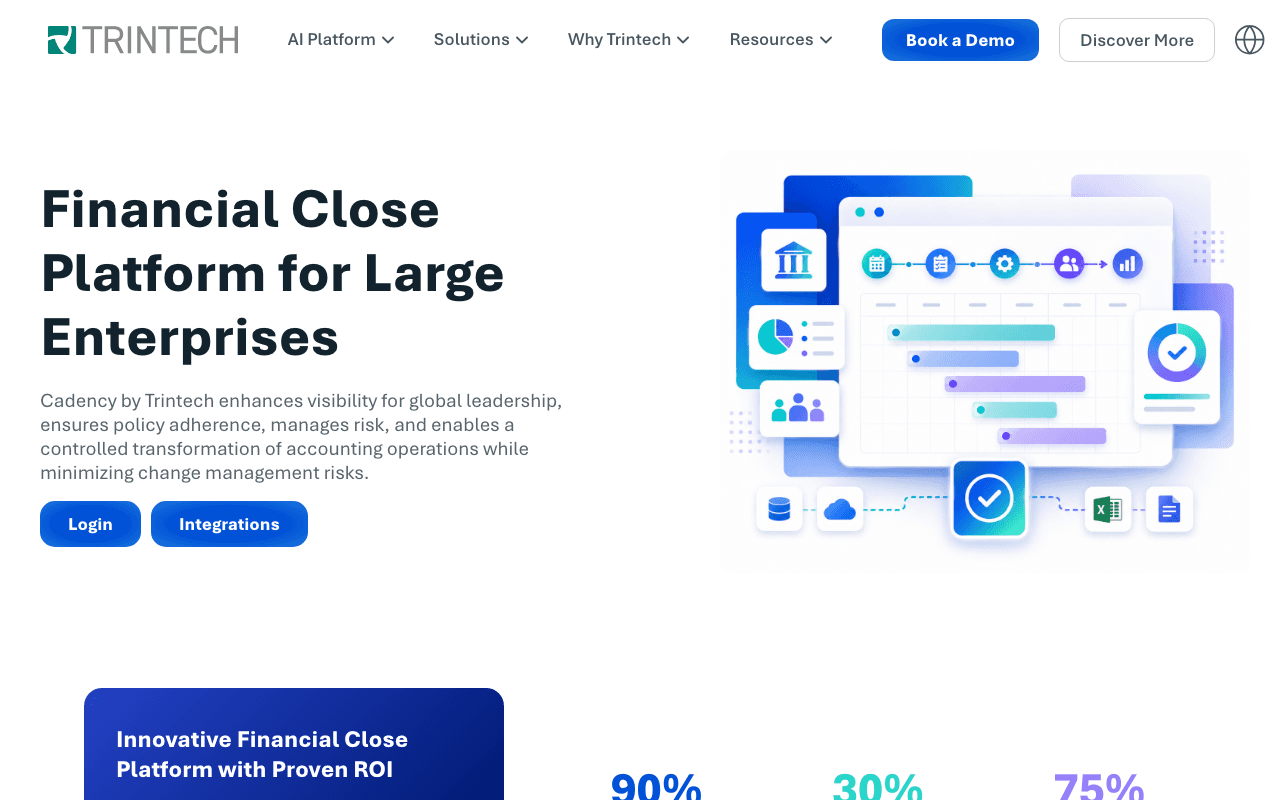
Cadency is Trintech’s enterprise close platform built for standardization across large, multi-region organizations. It’s designed for finance teams running shared services centers or managing close governance across dozens of entities, where inconsistent processes and fragmented controls are the real risk. Reconciliation depth and compliance evidence are its core strengths.
Where Cadency earns its place is in organizations that need enforced workflow consistency, not just visibility. Risk-based reconciliation workflows, multi-region task orchestration, and audit-ready controls documentation make it a serious option for global enterprises under heavy regulatory scrutiny. The tradeoff is implementation weight: this is not a tool you stand up in a quarter.
Best for: Global enterprises standardizing close across regions; shared services centers; organizations needing governance across many entities.
Key capabilities:
Account reconciliations with risk-based workflows
Close task management and orchestration
Compliance and controls evidence
Multi-entity, multi-region governance
Tradeoffs:
Heavy implementation footprint with multi-quarter rollouts
Workflow rigor can feel over-engineered for mid-market teams
Pricing: Quote-based. Enterprise deployments often range from 100,000 to over 1 million annually.
G2 rating: 4.3 out of 5 on G2 (500+ reviews).
Implementation effort: Multi-quarter rollouts with change management across regions.
Workiva: best for SEC reporting, SOX documentation, and disclosure workflows
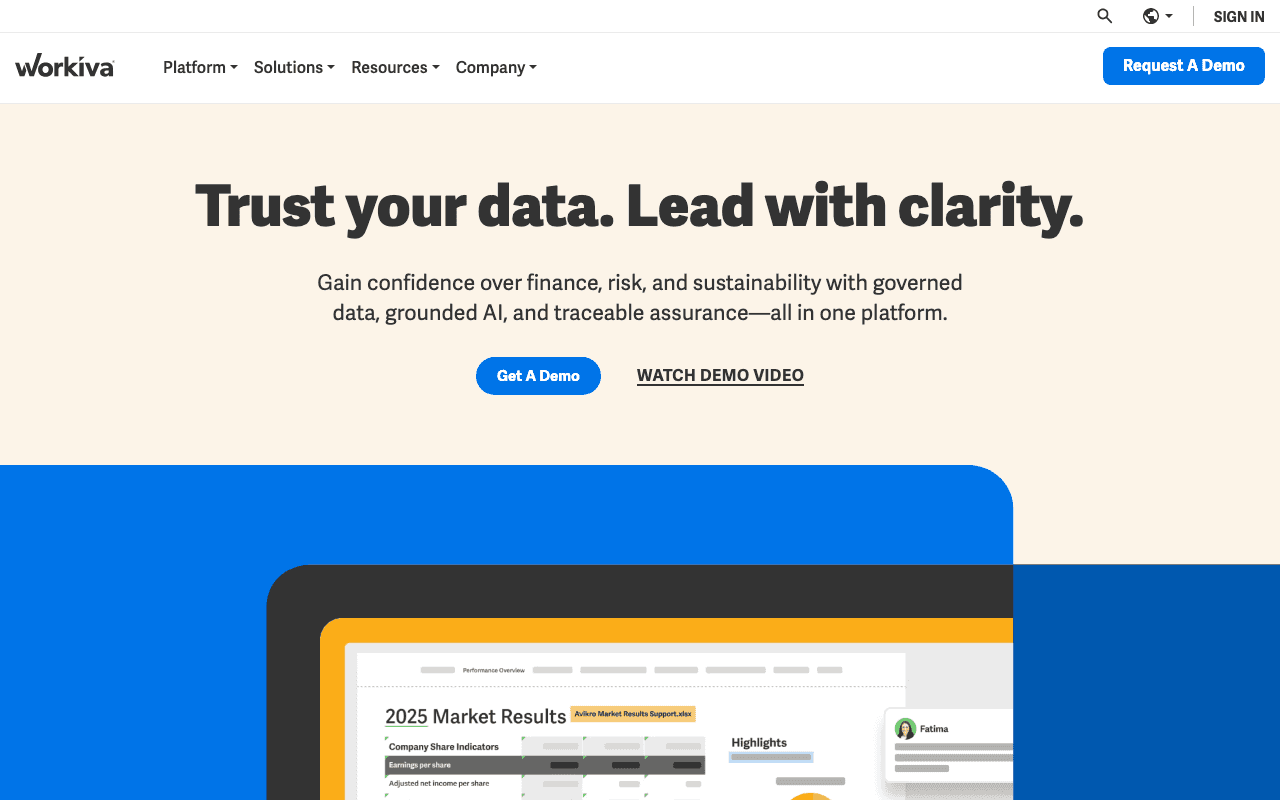
Workiva is the standard for controlled reporting, SOX documentation, and disclosure workflows. Public companies use it to link numbers across filings, maintain controlled evidence for auditors, and manage the disclosure process end-to-end under a single audit trail.
What it does not do is prepare journals or reconciliations. If your bottleneck is close prep, Workiva does not move that needle. It belongs in the stack for what happens after the numbers are ready, not for producing them.
Best for: Public companies with heavy SEC reporting; SOX programs needing controlled documentation.
Key capabilities:
Linked data across reports and disclosures
SOX documentation and control management
Audit workpapers and evidence collection
ESG and statutory reporting
Tradeoffs:
Reporting excellence does not remove close prep work
Almost always deployed alongside separate close tooling, not instead of it
Pricing: Quote-based. Mid-market Essentials around $36,000 per year.
G2 rating: 4.3 out of 5 on G2 (1,000+ reviews).
Implementation effort: Module-dependent, with reporting deployments running a quarter or two.
OneStream: best for a unified CPM platform
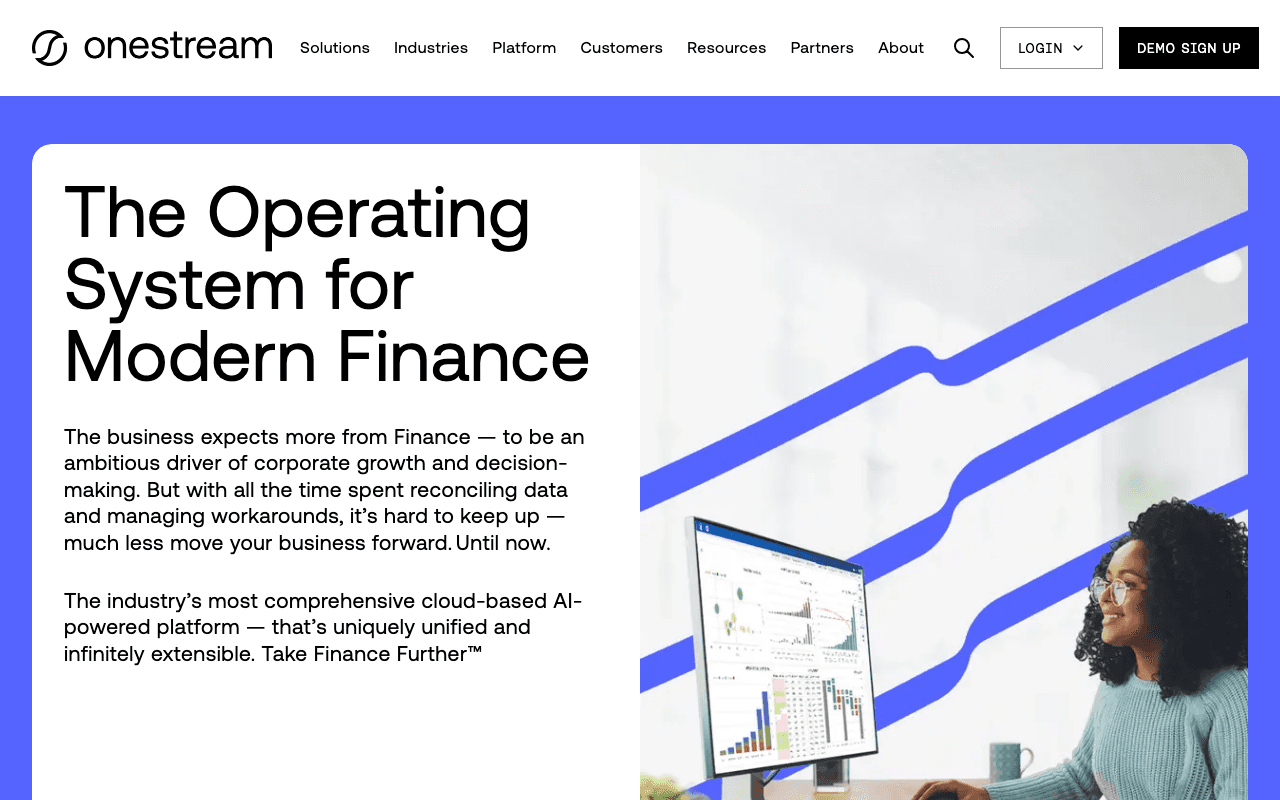
OneStream is a unified CPM platform covering financial close, consolidation, planning, and reporting under a single data model. Unlike close-specific tools, it eliminates the need for separate consolidation and planning systems by handling all of it in one place. That’s the appeal for enterprises tired of stitching together point solutions.
The tradeoff is scope. Adopting OneStream is a finance stack decision, not a close tool swap. You’re replacing multiple systems, not adding a layer on top of your ERP. That means significant change management, partner involvement, and a longer runway before you see returns.
Best for: Enterprises consolidating CPM onto one platform; multi-entity, multi-currency consolidation needs.
Key capabilities:
Financial consolidation and close
Planning, budgeting, forecasting
Reporting and analytics
Account reconciliation modules
Tradeoffs:
Larger scope than close tooling alone; this is a finance stack decision, not a close tool swap
Significant change management and partner involvement required
Pricing: Quote-based. Mid-market deployments often start around 150,000 per year; enterprise scopes reach $300,000-600,000+.
G2 rating: 4.6 out of 5 on G2 (1,00+ reviews).
Implementation effort: Multi-quarter with partner involvement. Requires a dedicated EPM team.
Oracle Fusion Cloud EPM: best for Oracle-aligned finance stacks
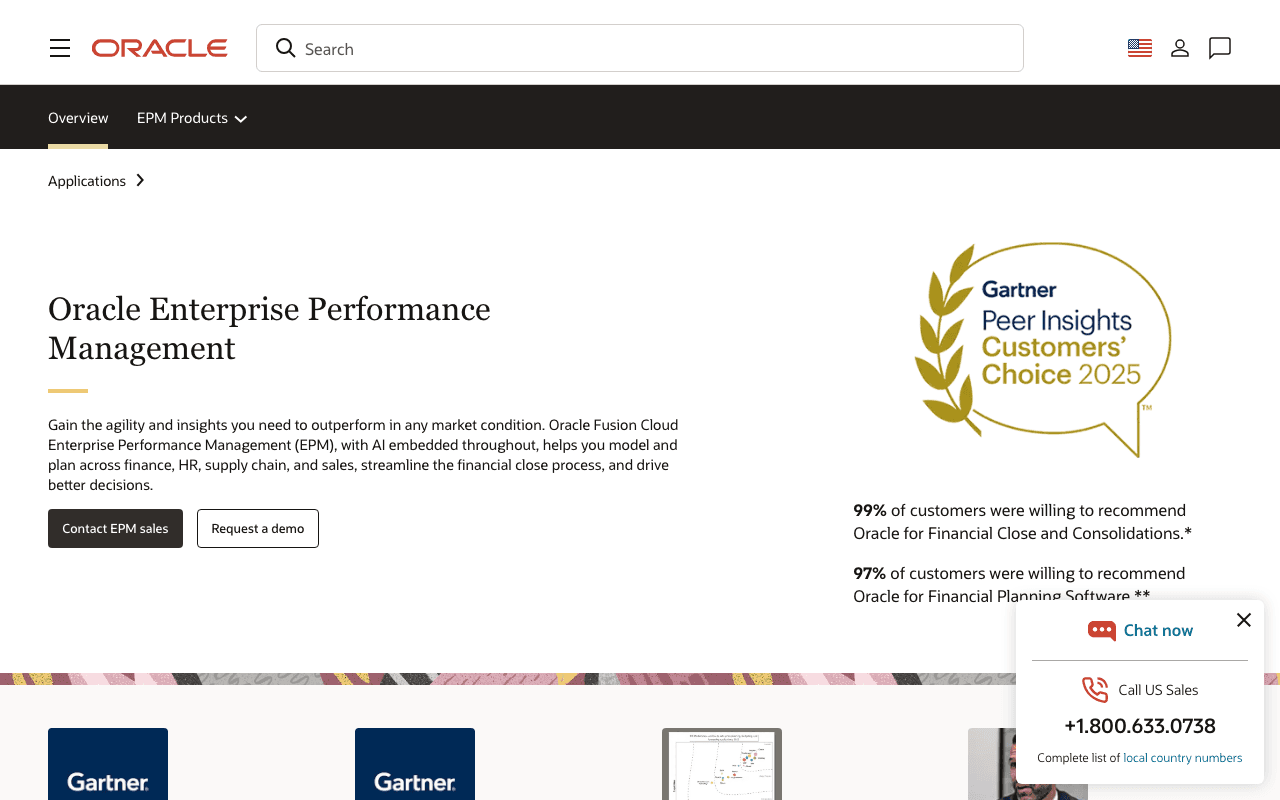
Oracle Fusion Cloud EPM is Oracle’s native enterprise performance management suite, covering financial consolidation, close management, account reconciliation, and reporting in one platform. For teams already running Oracle ERP Cloud or Oracle NetSuite, it removes the integration friction that comes with third-party close tools by keeping everything inside the same ecosystem.
The platform is built for consolidation-heavy environments: multi-entity, multi-currency, with tax and narrative reporting baked in. Outside the Oracle stack, the value proposition weakens considerably, and the implementation footprint is significant regardless of where you start.
Best for: Oracle ERP customers; enterprises standardizing on Oracle EPM; consolidation-heavy multi-entity finance.
Key capabilities:
Financial Consolidation and Close
Account Reconciliation
Tax Reporting and Narrative Reporting
Planning and Profitability modules
Tradeoffs:
Best suited for teams already inside the Oracle ecosystem; limited upside outside it
Scope and change management are significant, typically requiring a dedicated EPM team
Pricing: Per Hosted Named User. Lower-cost modules list around 150-225-250/user/month.
G2 rating: 3.9 out of 5 on G2 (100+ reviews).
Implementation effort: Multi-quarter, especially with Oracle ERP integration.
Cube: best for FP&A-led teams
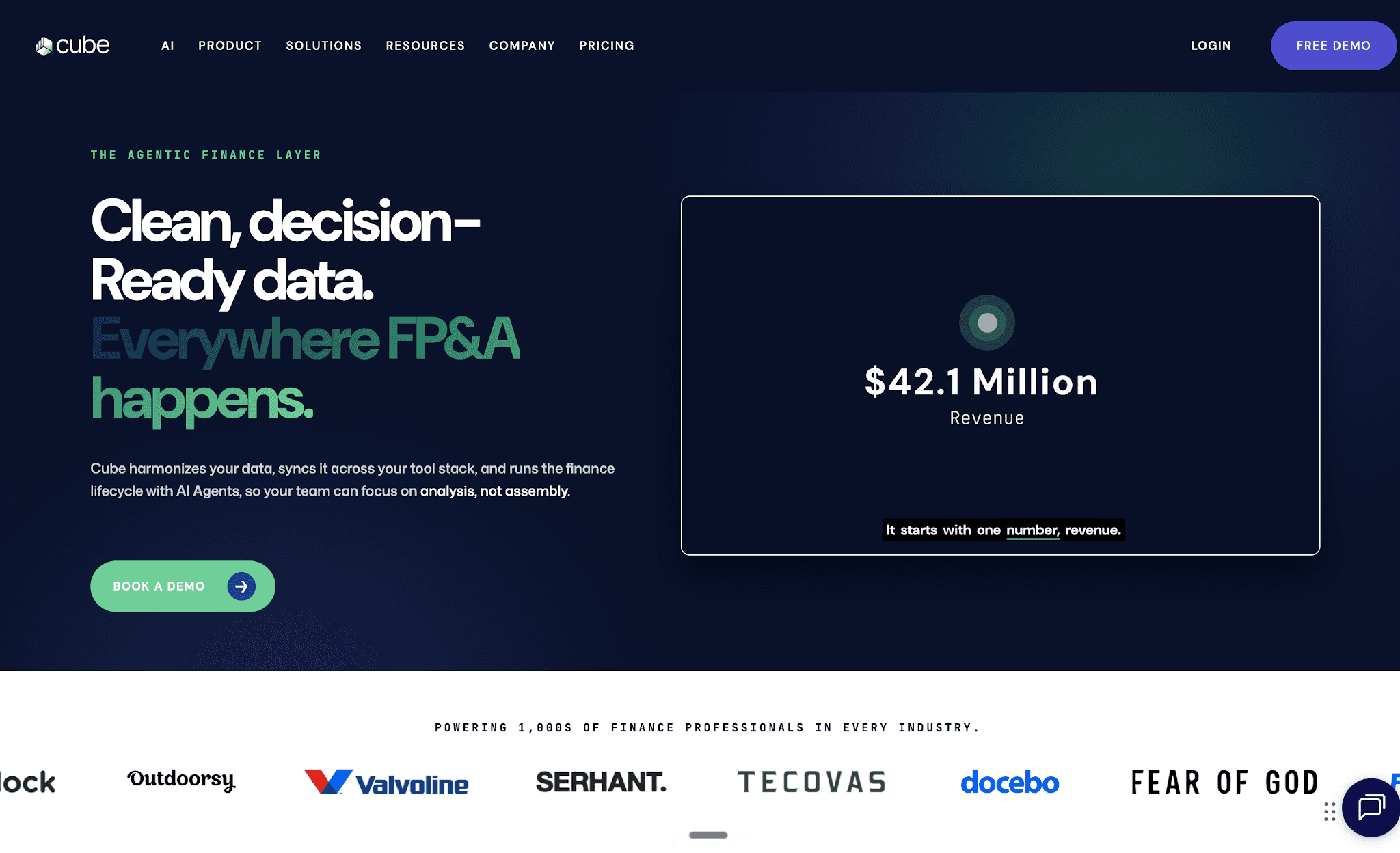
Cube is a spreadsheet-native FP&A platform that connects actuals, plans, and forecasts without forcing teams off Excel or Google Sheets. It pulls ERP data directly into your existing spreadsheet workflows, so finance teams get a single source of truth without rebuilding how they work.
It fits best where FP&A and accounting share close responsibilities and the primary pain is fragmented data across spreadsheets, not manual JE or reconciliation prep. If your bottleneck is planning and reporting alignment rather than close execution, Cube solves a real problem efficiently.
Best for: FP&A-led finance teams; spreadsheet-native workflows; teams unifying actuals and planning.
Key capabilities:
Spreadsheet-native planning and reporting
ERP-to-spreadsheet actuals flow
Multi-source data consolidation
Reporting and dashboards
Tradeoffs:
Light on JE automation and reconciliation prep
Closer to FP&A than dedicated close tooling
Pricing: Quote-based, scaled by users and modules.
G2 rating: 4.5 out of 5 on G2 (100+ reviews).
Implementation effort: Most teams live in weeks.
HighRadius: best for automation extending into reconciliations and anomaly detection
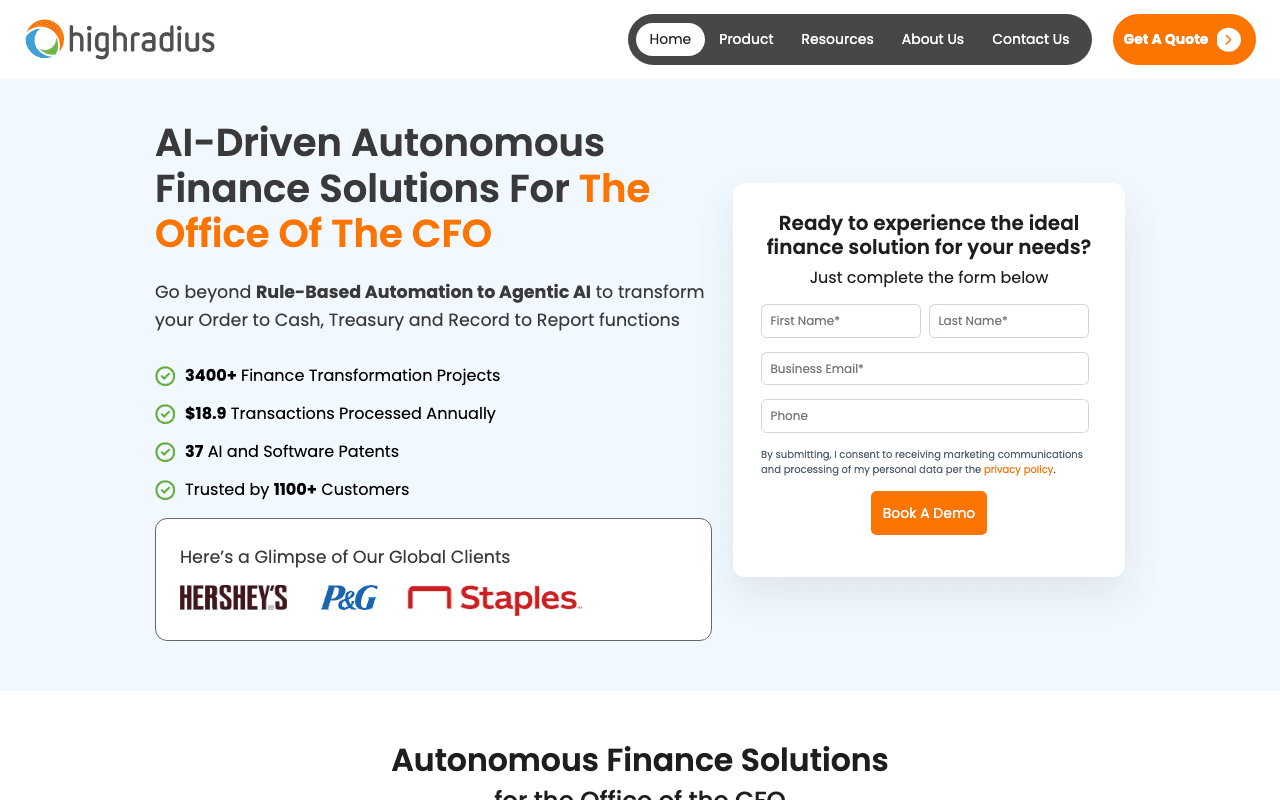
Radius is an AI-driven finance platform covering journal entry automation, transaction reconciliation, and anomaly detection. It’s built for high-volume environments where matching at scale and exception-based workflows matter. The platform has expanded its record-to-report suite meaningfully, adding close task orchestration and AI-assisted JE generation alongside its core automation capabilities.
Its roots are in order-to-cash, and that heritage shows in where the product is deepest. R2R modules are functional and improving, but teams evaluating HighRadius for close automation should validate the reconciliation lineage and audit trail carefully. It fits best where transaction volume is the primary driver and O2C and R2R workflows can be consolidated under one vendor.
Best for: High-volume reconciliation environments; teams wanting AI-driven anomaly detection.
Key capabilities:
Automated journal entries
Transaction reconciliation at scale
Anomaly detection
Close task orchestration
Tradeoffs:
O2C heritage shows in product depth; R2R modules are less mature than core O2C capabilities
Validate audit trail and lineage carefully before committing
Pricing: Custom, with outcome-based options available.
G2 rating: 4.3 out of 5 on G2 (200+ reviews).
Implementation effort: Module-dependent, typically a quarter or two for record-to-report scope.
Which FloQast alternative should you choose? decide by your bottleneck
Your bottleneck | Symptoms | Best-fit alternatives | What to validate first |
Manual prep work | Week-long JE and rec crunch | Maxima | Auto-certified accounts, JE coverage |
Multi-entity consolidation | FX, intercompany, 50+ entities | Maxima, OneStream, Oracle EPM | Consolidation and FX workflows |
SOX evidence and reporting | Disclosure and audit prep pain | Workiva | Evidence retention and linkage |
Close visibility | Coordination, not prep volume | Numeric, Adra | Task workflows and reviewer experience |
If your bottleneck is prep work, pick preparation-first
You’re buying removal of manual prep hours, not a better checklist UI. Maxima for agent-prepared journals, recs, and flux with transaction-level lineage; HighRadius for AI-driven reconciliation at volume. Validate continuous ingestion, exception handling, lineage, and approvals before posting.
If your bottleneck is multi-entity and multi-currency consolidation
Past 50 entities and into multi-currency complexity, you need a consolidation engine. OneStream for unified CPM; Oracle Fusion Cloud EPM for Oracle-aligned stacks. Validate consolidation, FX, intercompany eliminations, and chart ownership.
If your bottleneck is SOX evidence and reporting
Workiva is the standard for linking numbers to disclosures under controls. Pair with preparation-first tooling if prep is also a bottleneck.
FAQs
We’re at 50+ entities and adding currencies. Is it time to move on from FloQast?
Yes. The right move depends on whether your real bottleneck is consolidation or prep work. Shortlist OneStream or Oracle EPM for consolidation; Maxima for prep automation. Avoid replacing FloQast with another orchestration tool at the same operating model.
What’s the difference between close management and reconciliation software?
Close management orchestrates the process: tasks, sign-offs, visibility. Reconciliation software substantiates accounts: matching, certification, exception resolution. They solve different bottlenecks.
Can I get deep ERP integration without rebuilding my finance stack?
Yes. AI-layer platforms sit on top of your ERP through native connectors and prepare work without replacing systems. Validate connector breadth, refresh frequency, and whether lineage holds end-to-end under audit.
Will an alternative actually reduce close time, or just move work around?
Real reduction comes from removing prep hours, not from a nicer task list. Measure accounts auto-certified, JE generation coverage, reviewer minutes per reconciliation, and exception rate.
What should I demand in an audit trail if AI is involved?
Transaction-level lineage to source systems
Reproducible logic for every generated output
Immutable logs of every action
Approval before GL posting
Change logs for templates and rules
Evidence retention aligned to your policy
Access controls and segregation of duties
If a vendor can’t show all seven, treat the “AI” label as marketing.
What’s the quickest way to tell if a product is “real automation”?
Green flags: native continuous connectors with no middleware; lineage from output back to source transactions; approval gates enforced architecturally before posting. Red flags: “automation” that still requires CSV exports; no exception workflow; heavy manual rules maintenance every quarter.
Conclusion
The right FloQast alternative depends on what’s actually slowing your close. Shortlist by bottleneck, then validate with real numbers: accounts auto-certified, JE coverage, reviewer minutes, exception rate. Don’t buy by feature list.
Prep work bottleneck: Shortlist Maxima
Multi-entity consolidation: Shortlist OneStream, Oracle Fusion Cloud EPM or Maxima
SOX and reporting evidence: Shortlist Workiva or Maxima
Modern close management: Shortlist Maxima or Adra
Enterprise standardization at global scale: Shortlist Trintech Cadency

Move closer to an audit-ready, continuous close

Request demo
Insights, news and content
The latest
See all