
Every major technology shift produces a handful of companies that come to define the era. The internet gave us companies like Amazon, Google, Salesforce, and Workday. They didn’t just leverage a new technology. They built entirely new ways for people and businesses to shop, find information, sell, and work, and created ecosystems around them that reshaped how businesses operate.
The AI era is still being written. But a new generation of companies is already emerging at its forefront: Scale AI, Cognition, Glean, Decagon, and Handshake.
They are building the infrastructure, agents, and applications changing how work gets done. Over the past year, we’ve had an interesting vantage point into a very different part of these companies: their accounting and finance teams.
These companies have adopted Maxima as their agentic system of close. But what we find most interesting isn’t simply that AI companies are adopting AI software. It’s how their accounting leaders are thinking about AI inside their own organizations and rethinking how accounting work itself gets performed.
Journal entries are a good place to understand the shift
One of the clearest places these teams are applying agentic AI is also one of the oldest and most manual parts of accounting: journal entries.
Journal entries are deceptively difficult to automate. Take something relatively routine like a payroll accrual. Most of the workflow is deterministic: the accounting policy is known, calculations follow established logic, the journal has a defined structure, and controls and approvals can be prescribed. Traditional automation works well when everything behaves as expected.
The problem is that accounting rarely behaves exactly as expected. Names don’t match between the payroll system and the HRIS. The source file changes format. A new department appears. Someone sends the wrong report. An employee changes entities. An accounting policy introduces an exception.
Sometimes the system needs to read a PDF or spreadsheet, reconcile conflicting information, or make a low-risk accounting judgment based on context. And sometimes it simply needs to ask a person a question before continuing. This is the last mile of accounting automation, and historically it has been very difficult to automate.
Deterministic workflows execute the rules they were given extremely well. But when reality deviates from those rules, the workflow either fails or requires a human to step back in. That is why I believe accounting automation ultimately needs both deterministic execution and agentic inference.
At Rippling, Maxima automates cash JEs across 100+ bank ledgers and 2.6M monthly transactions, cutting reconciliation time 50% and freeing the capacity of 4 accountants.
From automating steps to delegating work
Deterministic automation is ideal when the steps and inputs are predictable. It is fast, controllable, and easy to validate. Agents become valuable when the work contains variability. They can interpret instructions, work through unstructured information, determine what to do when inputs change, and reason through situations that weren’t explicitly encoded when the workflow was created. Accounting requires both.
The accounting teams at these AI companies are increasingly using Max, our domain-specific, audit-ready accounting agent, to take on this work across millions of transactions. But the important part isn’t the transaction volume. It’s that the unit of automation is beginning to change.
Traditional automation asks: Which steps can we automate? Agentic automation asks: Which work can we delegate?
A workflow can automate five predictable steps and return the work to an accountant when something unexpected happens. An agent can increasingly be given an outcome, work through the steps required to produce it, deal with variability along the way, and bring the finished work back for review. This is much closer to how accounting teams themselves operate, and it changes what becomes possible to automate.
At Guild, a monthly entry went from 2 hours of manual work to 17 minutes running in the background, while another complex accrual workflow saw prep time fall 80%.
The accountant moves from preparer to first level reviewer
For decades, accounting technology has primarily made accountants better at doing the work. Spreadsheets made calculations easier. ERPs centralized the ledger. Close management software organized tasks and approvals. Workflow automation removed specific repetitive steps.
But the accountant remained the connective tissue. People still pulled information from one system, interpreted it, transformed it, investigated discrepancies, prepared the workbook, created the journal entry, attached the evidence, and sent it for review.
Agents change that relationship. If an agent can perform more of the preparation, the accountant no longer needs to personally execute every step of the process. They can oversee it.
This is the pattern we are beginning to see across these accounting teams: agents prepare more of the work; accountants review the output, handle material exceptions, and exercise judgment where judgment actually matters.
That distinction may sound incremental. Organizationally, I think it is profound. Accounting capacity no longer has to be defined solely by how much work each accountant can personally produce. It can increasingly be defined by how much work each accountant can responsibly oversee.
That matters particularly for rapidly growing companies. Complexity increases with growth: more transactions, entities, products, systems, currencies, and accounting policies. Historically, accounting organizations have absorbed that complexity by adding people. The companies at the forefront of AI are asking whether there is another way.
At Zendesk, 40+ accounting workflows have been automated, freeing the capacity of 4–8 FTEs with no planned incremental headcount.
What these teams don’t want
Watching these companies adopt AI has also been instructive because of what they are not doing.
They don’t want ERP brain surgery
The ERP remains the system of record. Companies have spent years building controls, integrations, processes, and institutional knowledge around systems like NetSuite, Sage, Workday, SAP, Oracle. Replacing that infrastructure introduces enormous operational risk for relatively little benefit. Agentic adoption doesn’t require ERP brain surgery.
The architecture we see emerging is different: systems of record remain underneath, while agents increasingly operate across the systems surrounding them and perform the work required to keep those records accurate. As agents take on more operational responsibility, the ERP increasingly becomes infrastructure rather than the primary place where humans perform the work.
As Decagon scaled, it moved from a startup ERP to NetSuite, while using agents to automate the accounting work around its system of record.
They don’t want headcount to scale linearly with manual work
High-quality accountants are difficult to find. More importantly, repetitive preparation is rarely the highest-value use of their time.
At a rapidly growing company, there is no shortage of work requiring human judgment: launching new products and pricing models, entering new markets, opening entities, drafting S-1 for the IPO, strengthening controls, supporting board meetings, and helping management understand the economics of the business.
Adding another accountant because transaction volume increased is sometimes necessary, but it shouldn’t be the default architecture of the accounting organization. Agents introduce another possibility: let machines absorb more of the incremental preparation work while accountants absorb more of the judgment.
At Scale AI, revenue grew 300% while accounting headcount stayed flat, 98% of manual workflows were eliminated, and the close went from 7 days to 3.
They don’t want generic LLMs making errors and costing exorbitant tokens
Being enthusiastic about AI does not mean being casual about financial controls. Accounting requires more than an intelligent model. It requires company-specific accounting policies, permissions, approvals, segregation of duties, source evidence, deterministic calculations where exactness matters, and an audit trail showing how the work was produced. Most importantly, an accountant needs to be able to understand the output.
Our approach at Maxima has therefore been built around three requirements: the work must be explainable, accurate, and auditable.
The underlying models will continue to improve. The durable system is the accounting infrastructure around them: the context, controls, integrations, policies, execution environment, review process, and auditability that turn model intelligence into accounting work that can actually be trusted.
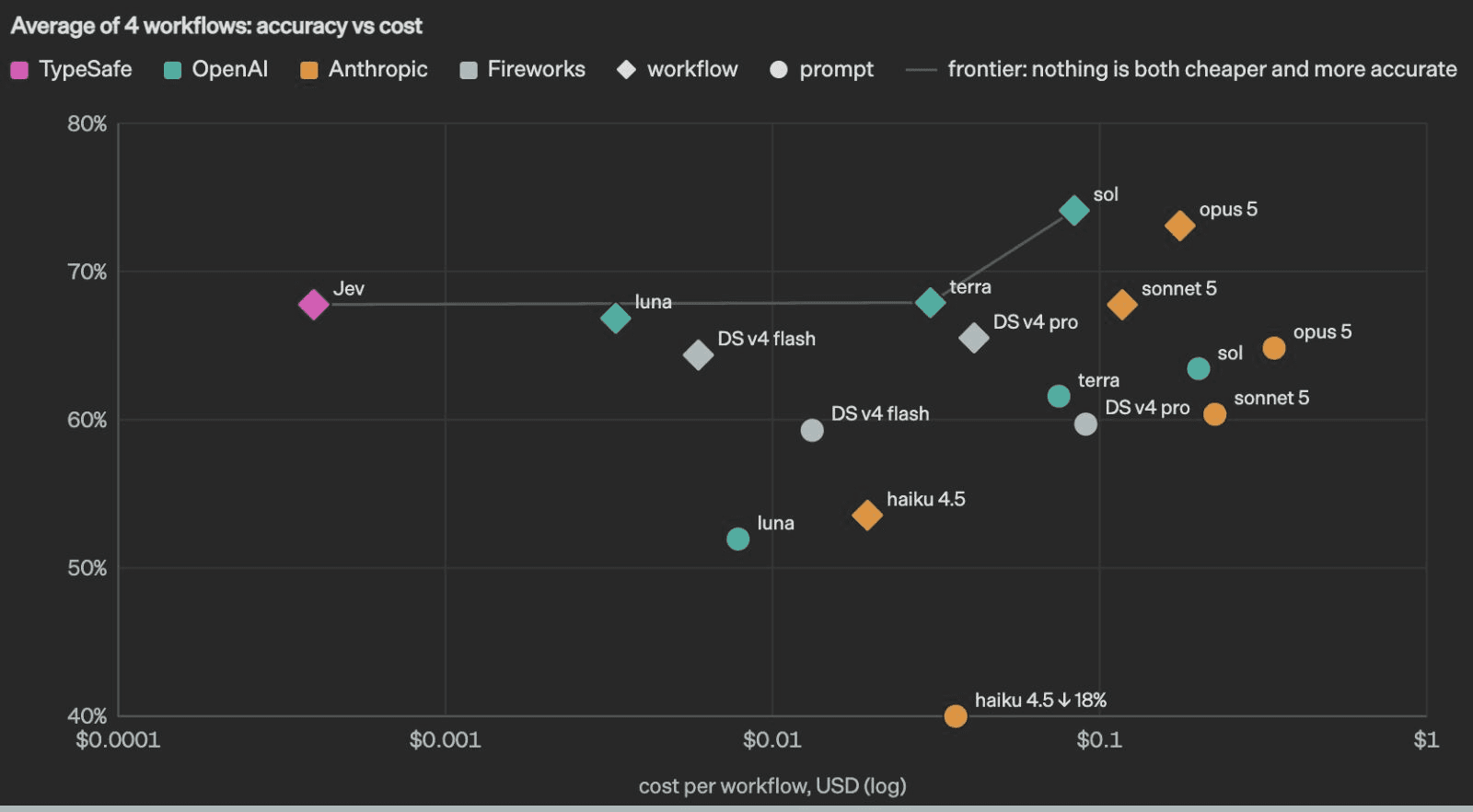
When it comes to token costs,, open models such as Kimi, Jev and Sol are cutting token costs by 90% every few months. CFOs don’t want to be held hostage into paying exorbitant token bills for accounting work that is simple and must be done every month.
The early shape of the agentic accounting organization
We are still very early. There will be accounting decisions that remain human for a long time, workflows where deterministic automation is preferable to an agent, and high-risk judgments where AI should inform the accountant rather than act independently.
But the direction is becoming clearer. Accounting is largely deterministic, but there is always a last mile where context, variability, and judgment enter the process. Today, humans bridge that gap. Increasingly, agents can too.
What is interesting is how differently the close software vendors are responding to this shift.
On one end, we are seeing close vendors forcing customers to an ERP built overnight: the idea that adopting AI requires replacing the financial infrastructure companies have spent years building. Rip out the ERP. Rewire the data. Rewrite the rules. Rethink the chart of accounts. Then hope a newly built system of record can eventually reproduce the reliability and controls of the one it replaced.
On the other end is what continued checklist tyranny. The underlying operating model remains unchanged: accountants still perform the work, then return to the close checklist to log what they did. Add an AI-generated memo here or an automatically coded Starbucks invoice there, and suddenly the same checklist is marketed as an AI platform.
Neither fundamentally changes the business metric - Did I cut down the cost, time, errors related to accounting work
The companies building the AI era are showing us a third path. Keep the systems of record and systems of transactions intact. Put agents to work across them. Let the agents perform more of the preparation, while accountants retain review, control, and judgment.
That is the bet we are making at Maxima with a very simple proposition: all the upside of agentic AI, without the risk of ERP brain surgery.

Move closer to an audit-ready, continuous close

Request demo
Insights, news and content
The latest
See all